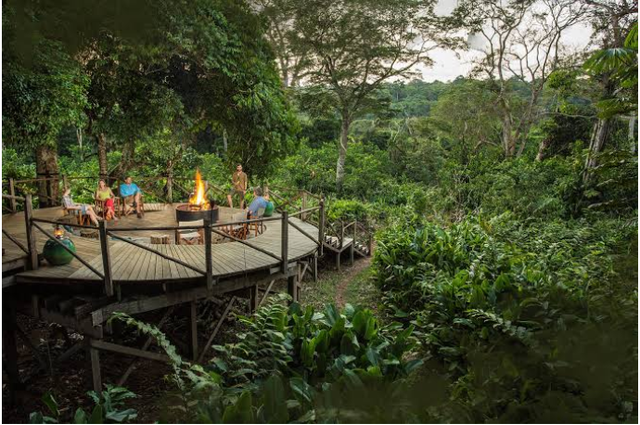

When most travelers think of African safaris, their minds jump to the open savannas of Kenya’s Masai Mara or the vast plains of Tanzania’s Serengeti. Yet some of the most extraordinary wildlife encounters on the continent are found not in grasslands, but deep within the equatorial forests of the Congo Basin — a region so dense, so ancient, and so biologically rich that scientists continue to discover new species within it every year.
A Congo safaris is fundamentally different from anything you will experience elsewhere in Africa. Forget the open Land Cruiser and the wide horizon. Here, the forest is your landscape. The light filters green through a cathedral canopy 40 meters above your head. Sounds replace sightlines: the deep chest-beat of a silverback gorilla, the alarm call of a red colobus monkey, the distant trumpet of a forest elephant moving through marsh. It is an immersive, multi-sensory experience that redefines what a wildlife safari can be.
Spanning the Democratic Republic of Congo (DRC) and the Republic of Congo (Congo-Brazzaville), the Congo Basin covers approximately 3.7 million square kilometers of tropical forest — second in size only to the Amazon. It shelters the world’s largest populations of chimpanzees and bonobos, critically endangered mountain and western lowland gorillas, the elusive okapi, forest elephants, and over 10,000 plant species, thousands of which are found nowhere else. For the serious wildlife traveler, no other destination comes close.
The Safari Landscape: What Makes the Congo Unique
Unlike the East and Southern African safari model built around open grasslands and vehicle-based game drives, Congo safaris are predominantly on foot. Walking through primary rainforest alongside expert trackers and naturalists, visitors engage with the ecosystem at ground level — reading signs, listening for calls, and following trails left by animals through dense undergrowth.
This intimacy is the defining quality of a Congo safari. You do not observe wildlife from a distance across a plain; you enter the animal’s world. The forest demands a different kind of attention — slow, quiet, and deeply present.
Many of the Congo’s premier safari destinations are centered around bases: natural forest clearings or swampy meadows where minerals leach into the soil, attracting large mammals that come to feed and socialize. Sitting in a concealed observation platform overlooking a bai at dawn, watching forest elephants, buffalo, and gorillas arrive and interact, is an experience unmatched anywhere in the world.
Premier Safari Destinations
Virunga National Park, DRC
Africa’s oldest national park, established in 1925, Virunga is the crown jewel of Congo safari experiences. Straddling the volcanic Albertine Rift in eastern DRC, it encompasses lava fields, glaciated peaks, savanna, and dense montane forest — more habitat diversity than most entire countries.
Mountain gorilla trekking is the signature experience. With fewer than 1,100 mountain gorillas remaining globally, each trek — strictly limited to eight visitors per habitutated family — is a rare privilege. Treks depart at dawn and can last anywhere from one to seven hours depending on gorilla movements. The hour permitted in the presence of the family passes with extraordinary speed.
Beyond gorillas, Virunga hosts chimpanzees, hippos, lions (one of the few remaining forest-adapted lion populations), forest elephants, and over 700 bird species. Mount Nyiragongo, one of Africa’s most active volcanoes, offers a day-and-night trekking experience culminating in a night camped beside the world’s largest persistent lava lake — a spectacle of molten orange light against a dark African sky.
Park-operated lodges have been carefully designed with sustainability and community benefit at their core, and Virunga’s ranger force — one of the largest and best-trained on the continent — works under extraordinary conditions to protect both wildlife and visitors.
Odzala-Kokoua National Park, Republic of Congo
Odzala-Kokoua is the Congo safari experience refined to its most elemental form. Covering 13,500 square kilometers of ancient equatorial forest in the north of Congo-Brazzaville, it is one of the oldest protected areas in Africa and among the continent’s most pristine ecosystems.
The park harbors one of Africa’s densest populations of western lowland gorillas — a subspecies genetically distinct from their mountain cousins, smaller in build and living at lower altitudes in humid lowland forest. Habituated gorilla groups can be followed on daily tracking walks led by expert Congolese guides who have spent years building trust with specific family groups.
The park’s bais are its greatest spectacle. Mbeli Bai, studied continuously by wildlife researchers since the 1990s, regularly hosts dozens of gorillas, forest buffalo, sitatunga antelope, and occasional forest elephants simultaneously. Access is from elevated wooden viewing platforms, and time limits are respected to minimize disturbance.
Two intimate luxury camps — Ngaga Camp in the forest and Lango Camp at a floodplain bai — provide world-class accommodation without compromising the wilderness experience. Each camp employs almost exclusively local staff, and revenue flows directly into community conservation funds.
Nouabalé-Ndoki National Park, Republic of Congo
A UNESCO World Heritage Site since 2012, Nouabalé-Ndoki is often called one of the last true wilderness areas on Earth. Its forests have never been logged, and some of its interior areas were so remote that the gorillas and elephants encountered there had never previously seen humans — making them remarkably unafraid.
The park’s famous Mbeli Bai and the adjacent Mondika research site have contributed more to the scientific understanding of western lowland gorilla behavior and social structure than almost any other location on Earth. Safari experiences here are conducted in partnership with the Wildlife Conservation Society, ensuring rigorous ecological standards.
Salonga National Park, DRC
The largest tropical forest national park in Africa, Salonga is a UNESCO World Heritage Site covering nearly 36,000 square kilometers in the heart of the Congo Basin. Accessible only by river or air, it shelters the world’s largest population of bonobos — humanity’s closest living relative alongside chimpanzees — as well as forest elephants, Congo peacocks (found only in the DRC), and dwarf crocodiles.
Bonobo tracking safaris in Salonga represent the frontier of Congo wildlife travel. Unlike chimpanzees, bonobos are found only in the DRC, and the habituation process has created unique research and safari opportunities for visitors working with specialist operators. Their complex social structures, peaceful conflict resolution, and high intelligence make bonobo encounters among the most thought-provoking wildlife experiences in Africa.
Wildlife Highlights
The Congo and Kenya safaris wildlife list reads like a catalogue of evolutionary marvels:
Great Apes — Four great ape species inhabit the Congo: mountain gorillas, western lowland gorillas, chimpanzees, and bonobos. No other country on Earth holds this combination.
Forest Elephants — Genetically distinct from savanna elephants, the smaller and more secretive forest elephant is a keystone species of the Congo forest, dispersing seeds across vast distances. Their populations have declined sharply due to poaching, making every sighting significant.
Okapi — Found only in the DRC, this giraffe relative with zebra-striped legs was unknown to Western science until 1901. Spotting one in the wild remains exceptionally rare and is considered by naturalists one of Africa’s great sightings.
Congo Peafowl — The DRC’s only endemic bird species, first described in 1936, inhabits deep lowland forests and remains one of the most sought-after birds in Africa.
Aquatic Life — The Congo River system holds over 700 fish species, approximately 80% of which are found nowhere else on Earth. River safaris and pirogue journeys offer encounters with the remarkable biodiversity of the world’s deepest river.
Practical Safari Planning
Best Time to Go
The optimal safari season aligns with the Congo’s dry periods: June through September and December through February. During dry months, forest trails are more navigable, bays are more concentrated with wildlife (as animals travel farther for water and minerals), gorilla safari Rwanda and gorilla tracking success rates are higher. Birdwatching peaks during the wet season when migratory species arrive, but access can be challenging.
Getting There
Virunga is reached via Goma in eastern DRC, which receives flights from Nairobi and Kigali. Odzala and Nouabalé-Ndoki are accessed via Brazzaville, with onward charter flights to airstrips within or adjacent to the parks. Salonga requires a combination of flights to Kinshasa and onward light aircraft or river transport. All premier operators arrange full logistics from your international gateway.
Health Requirements
Yellow fever vaccination is mandatory for entry into both Congos. Malaria prophylaxis is essential throughout. Consult a travel medicine clinic at least six to eight weeks before departure for a full vaccination and prophylaxis schedule. Medical evacuation insurance is strongly recommended for remote safari areas.
Choosing an Operator
Select operators who are members of recognized safari and conservation associations, who employ local guides and trackers, and whose revenue demonstrably supports community development and anti-poaching efforts. The best Congo safari operators maintain long-term relationships with park authorities and research institutions.
Key Takeaways
- The Congo offers Africa’s most intimate wildlife encounters, with Congo and Tanzania safaris Africa walking through primary rainforest replacing vehicle-based drives. The experience is immersive, sensory, and unlike anything in East or Southern Africa.
- Great apes are the headline attraction, with mountain gorillas, western lowland gorillas, chimpanzees, and bonobos all accessible through properly managed safari programs. No other destination on Earth offers all four species.
- Forest bais are the Congo’s unique spectacle — natural clearings where elephants, gorillas, and buffalo congregate, viewable from concealed platforms at extraordinary close range.
- Book permits and operators many months in advance. Gorilla trekking Uganda permits are limited and sell out early; specialist operators have waiting lists for peak season slots.
- Conservation fees are not a luxury tax — they are the safari. Permit revenues fund ranger salaries, anti-poaching operations, and community programs that make wildlife survival possible in the face of intense pressures.
- Travel with a specialist. Congo safari logistics require experienced local operators who understand security, logistics, and ecology. This is not a destination for DIY planning.
Questions & Answers
Q: How physically demanding is a gorilla trekking safari? A: Gorilla trekking ranges from moderate to strenuous depending on the day’s terrain and where the gorilla family is ranging. Trails can be steep, muddy, and dense with vegetation. A reasonable level of fitness is required — participants should be comfortable walking for several hours on uneven ground. The minimum age for gorilla trekking is 15 years. There is no upper age limit, but medical fitness is essential.
Q: How many gorillas will I see on a trek? A: You will follow one habituated gorilla family for one hour in their presence. Family sizes vary — some consist of 10 to 15 individuals, others 20 or more — typically including a dominant silverback, several females, juveniles, and infants. The one-hour limit is strictly enforced to minimize stress to the animals.
Q: Is it ethical to visit gorillas on safari? A: When conducted through properly managed, park-authorized programs, gorilla tourism is widely recognized by conservationists as a net positive for gorilla survival. Permit revenues directly fund the ranger forces that protect gorillas from poachers. Visitor numbers are strictly capped, health protocols are enforced (visitors with respiratory illness are not permitted to trek), and behavioral guidelines minimize disturbance. Responsible gorilla tourism is conservation tourism.
Q: What is the difference between mountain and western lowland gorillas? A: Mountain gorillas are larger, with longer, thicker fur adapted to high-altitude cold. They live exclusively in the Virunga volcanic mountains and Uganda’s Bwindi Impenetrable Forest. Western lowland gorillas are smaller and inhabit the dense humid forests of Central and West Africa, including the Congo-Brazzaville parks. Both are critically endangered.
Q: Can I combine a Congo safari with other African safari destinations? A: Absolutely. Virunga (DRC) pairs naturally with Rwanda’s Volcanoes and Bwindi impenetrable forest National Park or Uganda’s Bwindi for multi-country gorilla itineraries. Congo-Brazzaville can be combined with Gabon’s rainforest parks, which are accessible via Brazzaville connections. Many travelers incorporate a Congo leg into a broader Central or East Africa circuit.
Q: What should I pack for a Congo forest safari? A: Essential items include waterproof hiking boots with ankle support, lightweight long-sleeved shirts and trousers in neutral colors, a quality rain jacket, gardening gloves (for gripping vegetation on steep slopes), insect repellent with DEET, sunscreen, a wide-brimmed hat, a small day pack, a headlamp, and water purification tablets. A quality camera with a telephoto lens and a wide-angle lens for forest interiors is highly recommended. Leave bright colors and perfumes behind — both attract insects and disturb wildlife.
Conclusion
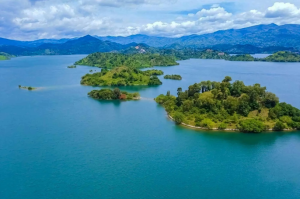
The Congo safaris does not compete with East Africa — it exists in an entirely different category of wildlife experience. Where the savanna delivers spectacle at scale — vast herds, wide skies, the drama of the open chase — the Congo delivers intimacy at depth. Here, you do not watch nature from outside. You step inside it, and it envelops you completely.
In an era of mass tourism and dwindling truly wild places, the Congo Basin stands as one of the last great frontiers — not because it is inaccessible (though it is challenging), but because it demands something of its visitors beyond the passive. A Congo safaris asks you to slow down, to listen, and to engage with a world that has been evolving for millions of years without our presence. When a mountain gorilla meets your gaze from three meters away and holds it — calm, curious, and utterly its own — you understand instinctively what is at stake in its survival.
Travel here carefully, spend here wisely, and leave nothing behind but the knowledge that your presence contributed, however modestly, to the extraordinary effort to keep the Congo wild. That is what makes a Congo safari not just a journey, but a commitment.